Barcelone

If you have organized a quick trip to Barcelona, don’t worry! Here’s an itinerary for you to explore the city in two days.

Aquí te dejamos un itinerario para que puedas visitar la ciudad en dos días.

Day 1 in Barcelona

After a hearty breakfast, we’ll start our visit in the Gothic Quarter and the Cathedral. This neighborhood is one of the oldest and most historically significant, providing a wonderful first impression of the city. During the tour, we can also make a stop at the terraces in this area.

Next, we’ll move on to Plaça de Catalunya and Las Ramblas, both must-visit sites in Barcelona. Within Las Ramblas, you’ll find La Boquería Market, one of the most famous markets in Europe. It dates back to 1836 and features over 200 stalls offering a wide variety of traditional Spanish and international culinary products. Undoubtedly, this visit will be a feast for our senses.

After our stroll along Las Ramblas, we’ll reach the old port, a pleasant place to explore.

At the port, we can also visit the Maremagnum Shopping Center, a distinctive shopping center with numerous stores. However, the most remarkable feature of this center is its wonderful views of the sea.

Taking advantage of our location in the port area, let’s enjoy Catalan cuisine at one of the many terraces and bars available there.

Day 2 in Barcelona

After our initial introduction, we’ll continue with our second day in Barcelona.

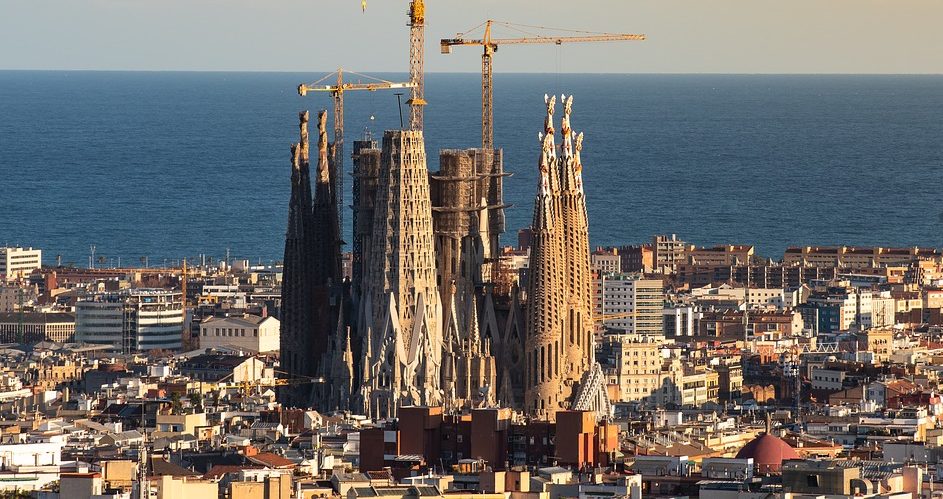
We’ll start big by visiting the iconic Sagrada Família, Gaudí’s masterpiece that is still under construction. If it’s our first time in Barcelona, this visit will leave us completely impressed.

About a 20-minute walk away, we’ll find another Gaudí gem, La Pedrera, also known as Casa Milà, named after the politician Pere Milà, who commissioned Gaudí for the project. Contemplating its facade is truly awe-inspiring. Perhaps the most distinctive feature of this monument is its rooftop, a must-visit as it offers spectacular views of the city.

After visiting these two architectural wonders, we’ll head to Park Güell, another work by architect Gaudí. It is located in the upper part of the city.

Opened in 1922 and declared a UNESCO World Heritage site in 1984, it is one of the city’s landmarks and a magical place to stroll around. Here, we can admire a wide variety of gardens and trees with geometric shapes, mosaics, two fairytale-like houses, and a viewpoint that offers beautiful views of Barcelona.

If you’re adventurous and have time and energy, you can continue exploring areas like the El Born neighborhood, one of the most charming neighborhoods in Barcelona.

Seville

Day 1: A Journey Through the History of Seville

One of the best options for spending the first day in the city is to visit the various corners of great heritage and historical value, many of which are located on the two banks connected by the Triana Bridge. Without a doubt, it is essential to visit both the Cathedral and the Alcázar. It is highly recommended to do so with an official guide who is an expert on both monuments. A guided tour of the Alcázar and the Cathedral allows you to truly understand and appreciate two of the great icons of the Andalusian capital. Alternatively, you can visit the Cathedral on one side and the Alcázar on the other.

After visiting one of these sites, we recommend heading to the area along the Guadalquivir River, where you can enjoy beautiful views of the city or cross the famous Triana Bridge. In the vicinity of the bridge, on both sides of the river, you’ll find different bars and restaurants where you can have lunch in a unique setting.

After lunch, we suggest taking one of the Free Tours offered in the city. These tours, where you pay what you think the guide’s work is worth, provide an entertaining way to explore the historic center of the city while learning about interesting facts and curiosities.

To conclude the day, you can take a stroll through the popular neighborhood of Triana, where you’ll find a variety of tapas bars, restaurants serving typical Sevillian dishes, or various wineries on both sides of the bridge where you can taste local wines. For those interested in the legends and mysteries of the city, we recommend taking the Tour of Enchanted Seville. This guided tour, which is increasingly popular, allows you to discover the different mysteries, legends, and paranormal events of the city. This route is also a great opportunity to explore the Santa Cruz neighborhood, which is closest to the Cathedral.

Day 2: Flamenco and Sevillian Art

After exploring the major monuments and the areas near the Triana Bridge on the previous day, the second day can be dedicated to visiting the areas near the Puente de los Remedios. Sevilla has a multitude of quality cafés in every corner, so finding a place to have breakfast should not be a problem. After that, you can head to the Puente de los Remedios area and visit the Torre del Oro (Naval Museum), the Plaza de España, and the Maria Luisa Park. These three are undoubtedly some of the great icons of Seville located just a few meters apart.

Inside the Maria Luisa Park, you’ll find the Archaeological Museum and the Museum of Arts and Customs, both of which, in addition to their important contents, are worth admiring for their Neo-Mudéjar and Neo-Renaissance architecture. The area surrounding both museums and the Plaza de América, where the former pavilions of the Expo are located, is an ideal place to have lunch due to its variety of bars and restaurants.

In the afternoon, you can head to the Plaza de la Encarnación, where the majestic “Setas” (Mushrooms) are located. From a height of 26 meters, you can enjoy one of the best views of the city. You can easily reach this place on foot or using any of the recommended modes of transportation.

After that, we recommend enjoying an incredible flamenco show at El Palacio Andaluz. This typical flamenco tablao is located in the former Cruzcampo Pavilion of the 1992 Expo, on the Isla de la Cartuja. It’s a unique place where you can also have dinner.

Another option for your visit to Seville is to take a trip or tour to Italica. This Roman archaeological site, located 7 km from the city, is one of the most spectacular in the world. Daily excursions to Italica are available, including transportation and a guided tour of the site. Alternatively, you can also drive there on your own and take a guided tour once you arrive. Without a doubt, we recommend visiting the remains of this ancient city, which is becoming increasingly renowned, as it is the birthplace of emperors like Hadrian and Trajan.

Córdoba

Day 1: Mosque, Alcázar, and the historic part of Córdoba

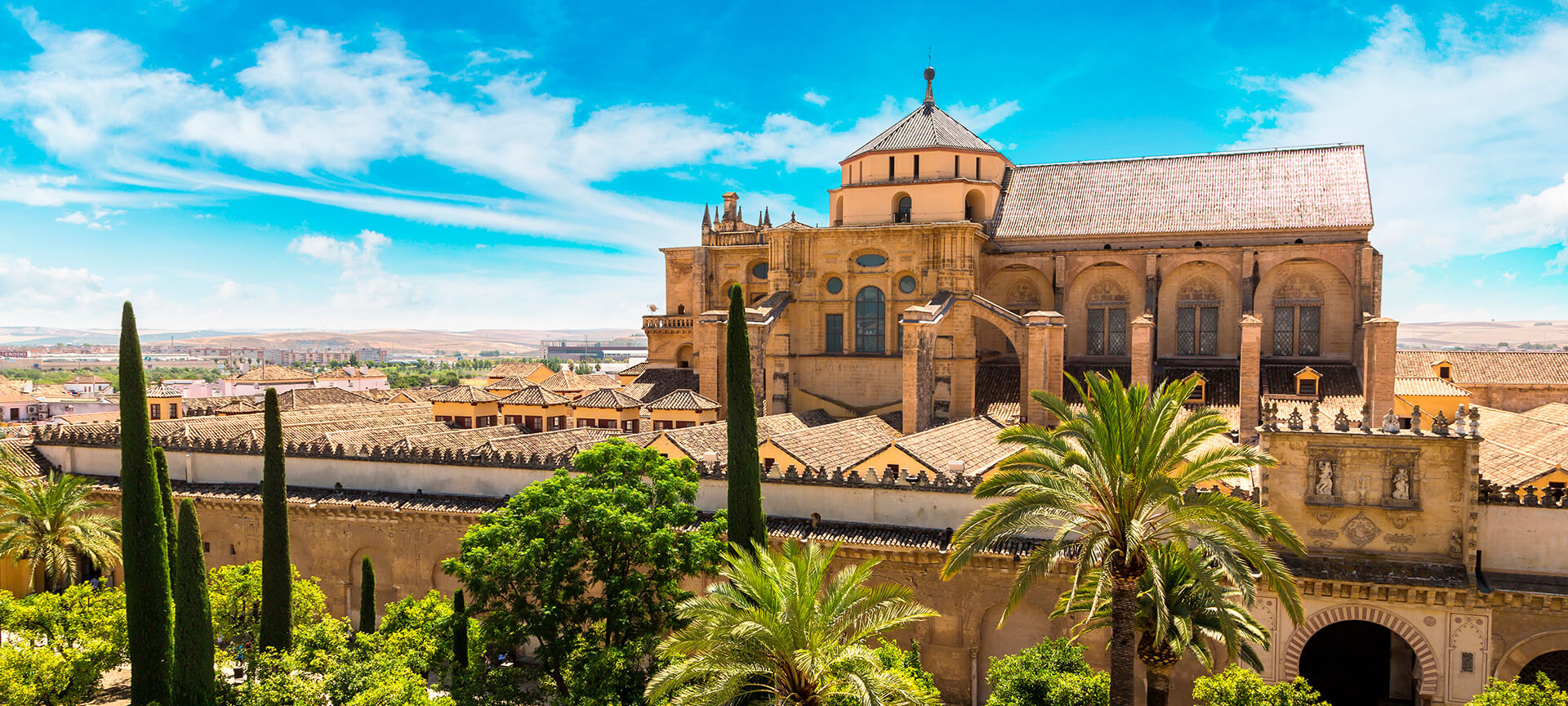
Undoubtedly, the best way to start your visit to Córdoba is by exploring the most characteristic landmarks of the city, such as the Mosque-Cathedral and the Alcázar de los Reyes Cristianos.

We suggest starting the day by visiting the Mosque of Córdoba, the city’s iconic symbol and one of the most visited and renowned monuments in Spain. We recommend taking a Visita Guiada por la Mezquita de Córdoba, where an expert guide will help you better understand its significance, maximizing your visit. If you prefer to explore on your own, you also have the option of taking a self-guided tour with an audio guide. The duration of this visit is approximately one hour.

After visiting the Mosque, you can take a stroll through the Jewish Quarter (Judería) until you reach the Alcázar de los Reyes Cristianos. The best way to experience this monument is through a guided tour of the Alcázar de los Reyes Cristianos, where an official guide will provide detailed and dynamic explanations of its history.

A more comprehensive option to see these and other monuments during the first day in the morning is to take a complete tour of Córdoba . Accompanied by an official guide, you will visit the main monuments of Córdoba. The tour begins at the Mosque, continues through the Jewish Quarter, visits the Synagogue, passes by the Chapel of San Bartolomé and the city walls, and concludes with a visit to the Alcázar de los Reyes Cristianos.

Once you have visited the most iconic monuments of Córdoba, you can stop for lunch at the various bars and restaurants located in the Jewish Quarter and the historic center. There, you can taste typical Cordoban dishes such as flamenquines, salmorejo, or rabo de toro. You can also try a diverse selection of high-quality Arabic cuisine.

In the afternoon, if you’re visiting on a weekend (Fridays and Saturdays), we suggest taking a Free Tour of the Subterranean Córdoba, where you will explore the hidden and underground part of the city. In this two-hour tour, you will discover lesser-known places such as ancient mausoleums, the Roman theater, the old Arab baths, or some cisterns.

You can spend the rest of the afternoon walking along the Guadalquivir River, enjoying the beautiful views from the Roman Bridge. You also have the option to visit the Archaeological Museum, one of the best in Spain, with a truly comprehensive and extensive collection that ranges from the origins of Córdoba in prehistory to Andalusian remains.

As night falls, you have a variety of activities to choose from. One of them is the most popular Free Tour the Mistery Tour of Córdoba. In this tour, you will discover the mysterious side of Córdoba through tales of legends, mysteries, or paranormal stories that have taken place in the historic center. After the tour, we recommend having dinner at one of the restaurants or tapas bars near the river, where you can also find a wide range of nightlife options.

Day 2: Medina Azahara, Córdoba’s Patios, and Arab Baths

For the second day in Córdoba, we suggest taking a guided tour to the palatial city of Medina Azahara, located 8 kilometers from the capital. It is a unique archaeological site in Europe and the world, reflecting the great power the city achieved during the Caliphate period. In this tour, you will explore the entire archaeological complex of Medina Azahara, which was declared a UNESCO World Heritage Site in 2018. The duration of this visit is three hours.

For lunch, we recommend going to the Mercado de la Corredera, a unique place. It’s a typical market like any other city, but with the peculiarity that at stall number 18, they will cook for you what you purchase fresh from any of the other food stalls. In addition to this particular option, you can also go for tapas at one of the taverns located in the Jewish Quarter.

Córdoba is known for its stunning patios, and you can dedicate the afternoon to visiting some of the mos important patios of Córdoba algunos de los patios más importantes de Córdoba with a official guide. Throughout the historic center, residents open their flower-filled patios to the public, creating a spectacle worth witnessing that attracts thousands of visitors annually, especially during the spring season.

To end the day, we recommend enjoying the Árab Baths of Córdoba: Hammam Al Ándalus. It is one of the star attractions and most sought-after options in the city. These traditional Arab baths are the perfect place to relax, and you can enjoy a massage there.

Other essential activities to complete your visit to Córdoba

Beyond what has been mentioned for two days, there are several alternative or complementary activities that are truly interesting for your visit to Córdoba. This way, you can adapt your visit according to the activities that attract you the most or best suit your needs, based on the proposed guide.

  • Monumental Córdoba Free Tour: a tour focused on discovering the most monumental and heritage side of the city’s history, accompanied by an official guide. 
  • Theatrical Free Tour of Córdoba: this tour is a different and fun proposal to get to know the city, taking a journey through time and meeting popular Cordovan characters from another era. Undoubtedly, we recommend not to miss this opportunity if you visit Córdoba and want to understand the Caliphate city through the eyes of people who lived in it centuries ago.
  • Panoramic bus tour: you can choose between a 1 or 2-day pass. You can enjoy a tour through the main streets of Córdoba, with the possibility to hop on and off as much as you like, stopping at key points of the city to visit them, enjoying wonderful views, and getting to know the city in more depth with the provided audio guide. Depending on the chosen pass, different advantages will be offered to you.

Granada

Day 1: The Alhambra and the historic center, must-see sites

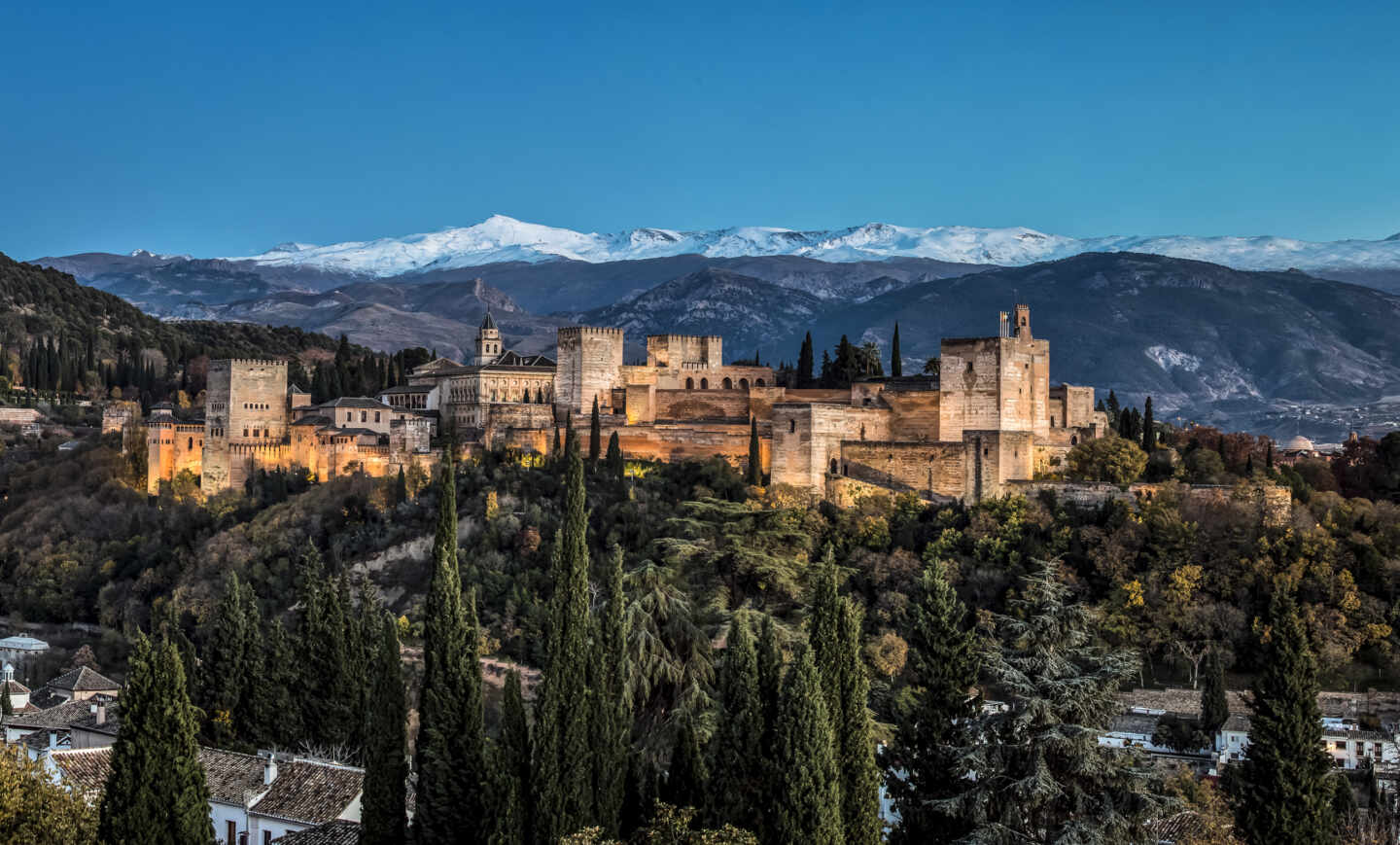
Undoubtedly, the best way to start a trip to Granada is by visiting its most recognized site: the Alhambra. The huge monumental enclosure is usually visited completely in a full morning (approximately 3-4 hours). Depending on the interest you have, the visiting time may vary, but we recommend the Complete Guided Tour. In this visit, accompanied by an official guide expert in the monument, you will visit all the corners of the Alhambra, which will be explained in a pleasant way but with all the necessary details to know this Nasrid jewel.

Once the visit to the Alhambra, which we recommend in the morning, you can have lunch in the surroundings of the monument or move to the historic center to enjoy some of the tapas bars, very typical in the city. In the area of the Plaza Mariana Pineda, Plaza Nueva or the Carrera del Darro is where some of the best places to eat are located. Another option is to enjoy an authentic Nasrid menu in the surroundings of the Alhambra.

After lunch, we recommend to take the Free Tour Granada Imprescindible: Historic center and lowe Albaicín. On this tour you will see the must-see places in the historic center such as the Cathedral, the Plaza de las Pasiegas or the Alcaicería and part of one of the most popular neighborhoods, the Albaicín. Undoubtedly, it is the best option to spend the afternoon touring some of the most popular spots in the Nasrid capital. This Free Tour is also available in the morning.

If the city of Granada also stands out for something, it is for the amount of mysteries and legends that its streets possess. For all those interested in this type of stories and histories we recommend the option of taking the Free Tour of the Dark Granada: Mysteries and Legends. In this Free Tour you can visit some of these mysterious stories in addition to the various legends linked to corners of the city.

The best option for dining is to head towards the historic center. Plaza Mariana Pineda and Plaza del Campillo Bajo are two of the spots where you can find some of the best bars and restaurants in town.

Day 2: A stroll through Granada’s most popular neighborhoods

A trip to Granada cannot be considered complete without visiting two of its most popular neighborhoods worldwide. The Albaicin and Sacromonte are the two most popular neighborhoods of the city. The former has streets that transport us to the Andalusian period, with several viewpoints and squares overlooking the Alhambra and the entire city. Sacromonte is famous for its cave houses, unique constructions in the world. Also, it is a flamenco neighborhood, where you can feel perfectly this traditional art.

Undoubtedly, the best way to visit these two parts of the city is through the Free Tour Unesco Heritage neighborhoods: Albayzín and Sacromonte, in which accompanied by an official guide you can learn more about two of the most popular neighborhoods in the world. This Free Tour, available both in the morning and in the afternoon, is undoubtedly a must if you visit Granada.

For lunch we recommend, in addition to the areas mentioned above, any of the restaurants and bars in Calle Elvira. Also, if you prefer, you can go to Plaza Bib-Rambla, where you can also find many cafes where you can enjoy some good churros with chocolate or a coffee.

If in the morning you visited the Albayzín and Sacromonte we recommend visiting the Realejo in the afternoon-evening. This neighborhood, the old Jewish quarter of the city, has some of the most photographed streets and squares of Granada. For this, it is best to take the Free Night Tour of Granada, which mainly covers the neighborhood of Relajo, as well as highlights of the historic center such as the Cathedral. Once the Free Tour is over, you can stay in the Realejo and have dinner in the area of Calle Navas or Plaza Campo del Príncipe, where there is a varied gastronomic offer.

Throughout this day you can enjoy a Flamenco Show in Natural Cave or a Flamenco Show in a tablao in Granada. In both cases you can approach a unique and special art in the city of Granada, land of zambra, flamenco and tablaos and caves. The latter, located in the Sacromonte neighborhood, are unique natural spaces in the world where flamenco is felt in a particular way.

Other activities to complete your trip to Granada

MNPQ Gestores turísticos S.L. ha sido beneficiaria del Fondo Europeo de Desarrollo Regional cuyo objetivo es mejorar la competitividad de las Pymes y gracias al cual ha puesto en marcha un Plan de Marketing Digital Internacional con el objetivo de mejorar su posicionamiento online en mercados exteriores durante el año 2022/2023. Para ello ha contado con el apoyo del Programa Xpande Digital de la Cámara de Comercio de Granada.