
Why visit Úbeda and Baeza?
Úbeda and Baeza, located in the heart of the province of Jaén, are two marvelous cities with an incredible heritage, which led to both being declared World Heritage Sites by UNESCO in 2003. Their palaces, squares, streets, and churches undoubtedly deserve this recognition. The mere 9 kilometers that separate these two places make them an ideal destination to visit in one or two days.
To get to know Úbeda and Baeza, we highly recommend taking one of the guided tours that allow you to explore remarkable sites accompanied by an expert guide. The Sacra Capilla del Salvador, the Basilica of San Juan de la Cruz, the Palace of Jabalquinto, the Plaza del Pópulo, the Basilica of Santa María de los Reales Alcázares, and the Cathedral of the Nativity of Our Lady of Baeza are some of these ideal spots to visit with a guide.
Here, you can enjoy the Mediterranean diet, where the main protagonist is Extra Virgin Olive Oil (AOVE), as well as tapas. These cities are perfect for wine tourism, visiting some of their olive oil mills. Here are some places you shouldn’t miss on your trip to Úbeda and Baeza:
Vázquez de Molina Square (Úbeda)
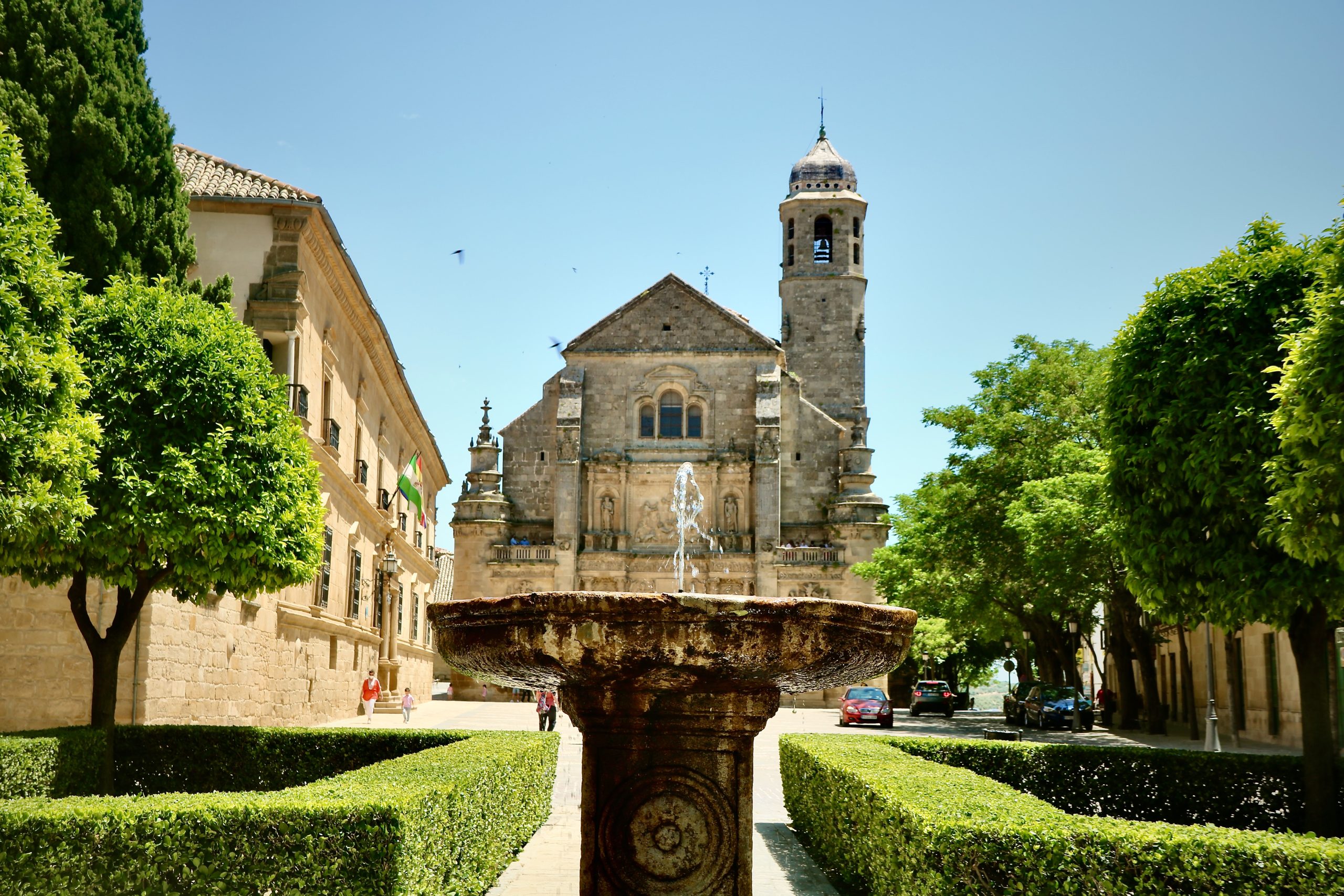
Vázquez de Molina Square is considered one of the greatest examples of Renaissance urban planning. It stands out not only for its beauty but also because it brings together some of Úbeda’s main monuments. The Sacra Capilla del Salvador, the Palace of the Dean Ortega (National Parador), the Vázquez de Molina Palace, and the Church of Santa María de los Reales Alcázares are located in the vicinity of this square. Furthermore, the ancient Arab Alcázar was located in this same place.
How to get there?
- On foot: towards the historic centre
- Booking our transfers
- By bus: Line 1, Plaza de Santa María stop
- By car: there are public and private car parks nearby.
Deán Ortega Palace (Úbeda)
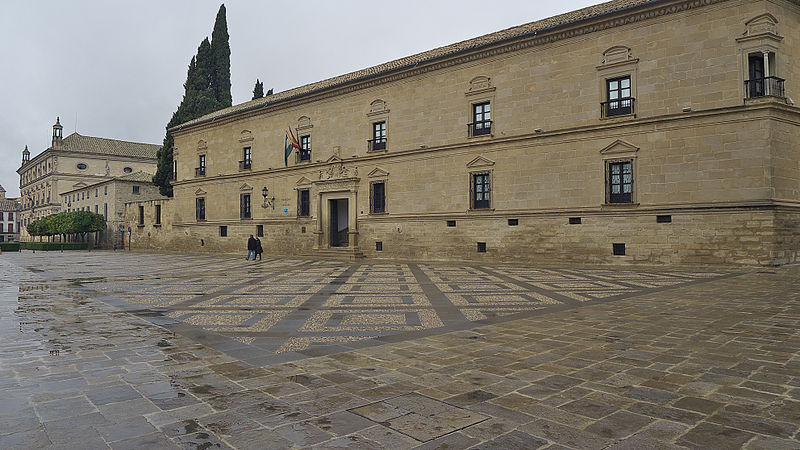
The Deán Ortega Palace dates back to the 16th century and owes its name to its founder, Fernando Ortega y Salido, who was the first chaplain of the Sacred Chapel, priest of Malaga Cathedral and choir master of the Church of Santa María de los Reales Alcázares in Úbeda. Since 1930 it has been a Parador Nacional, one of the oldest in Spain. The courtyard and some of the galleries inside can be visited. It is a good place to stay if you want to delve into the Renaissance history of Úbeda.
Schedule:
- Always open.
How to get there?
- On foot: towards the historic centre
- Booking our transfers
- By bus: Line 1, Plaza de Santa María stop
- By car: there are public and private car parks nearby.
Sacred Chapel of El Salvador (Úbeda)
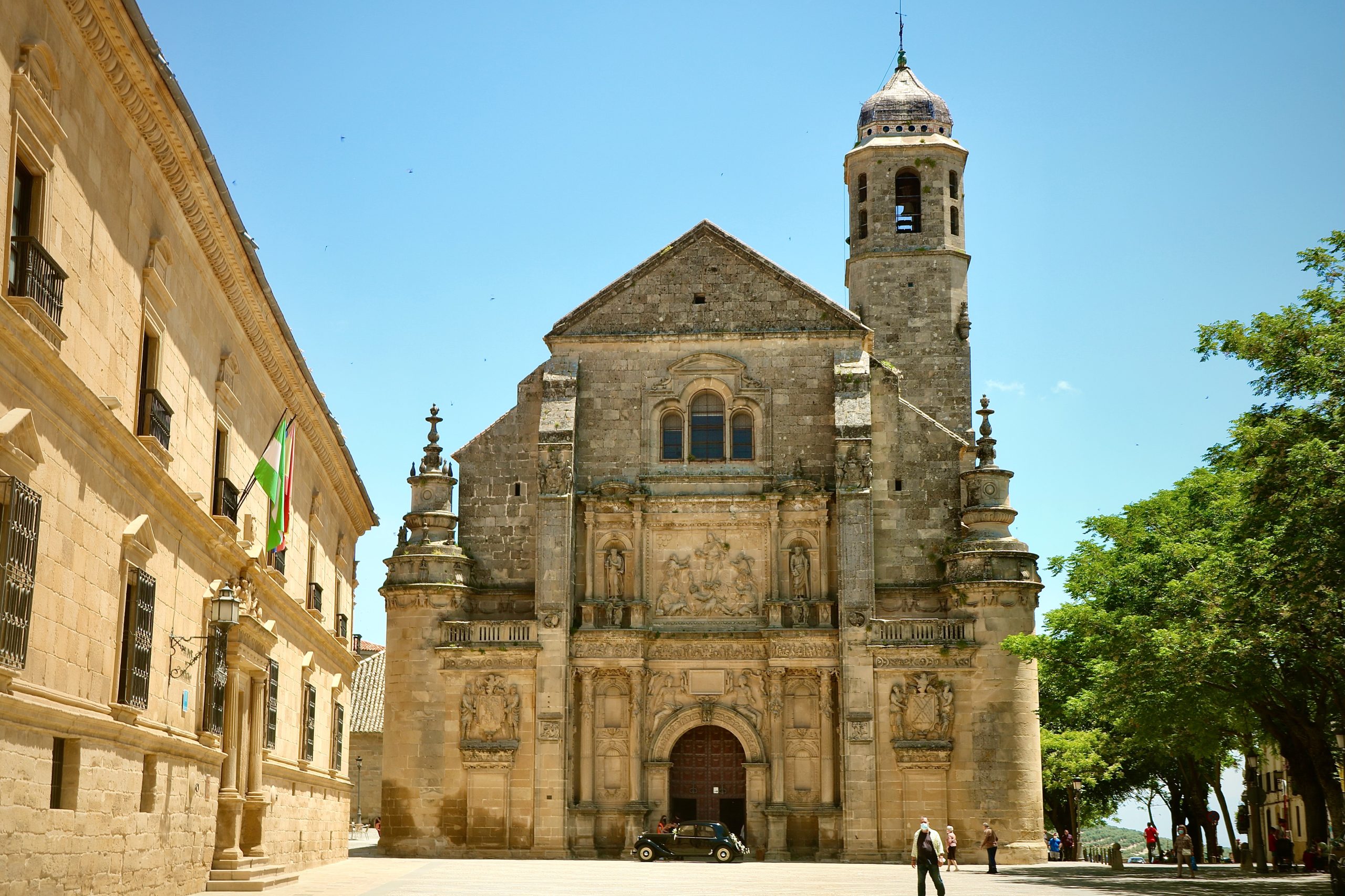
The Sacred Chapel of the Saviour is one of the most important Renaissance works in Úbeda, declared a historic-artistic monument in 1931. It was designed by the well-known architect Andrés de Vandelvira. Inside is the pantheon of Francisco de los Cobos, an illustrious figure in the city, who financed the construction of the church. On the façade there are different noble coats of arms as well as an important sculptural decoration. It is one of the most visited places and one of the most impressive for those who enter it.
Schedule:
- Monday to Thursday: 10:00 am to 2:30 pm and 4:00 pm to 7:00 pm
- Friday and Saturday: 10:00 am to 7:00 pm
- Sunday: 11:30 am to 2:30 pm and 4:00 pm to 7:00 pm
How to get there?
- On foot: towards the historic centre
- Booking our transfers
- By bus: Line 1, Plaza de Santa María stop
- By car: there are public and private car parks nearby.
Vázquez de Molina Palace (Úbeda)
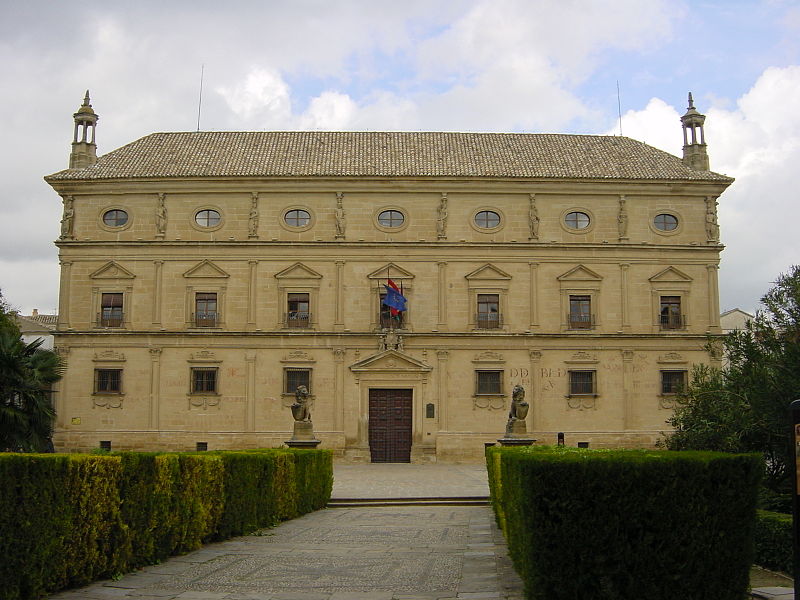
Vázquez de Molina Palace (or Palace of the Chains), also of Renaissance character, was built in the 16th century by Andrés de Vandelvira. It was declared a National Monument in 1931 and has been the seat of the City Hall of Úbeda since 1850. Like the Dean Ortega Palace, this palace is not open for visits, but its beautiful Renaissance courtyards can be admired. The lower floor houses the Renaissance Interpretation Center (temporarily closed).
Schedule:
- Temporarily closed.
How to get there?
- On foot: towards the historic center
- By booking our transfers
- Bus: Line 1, stop at Plaza de Santa María
- By car: there are nearby public and private parking facilities
Basilica of Santa Maria de los Reales Alcazares (Úbeda)
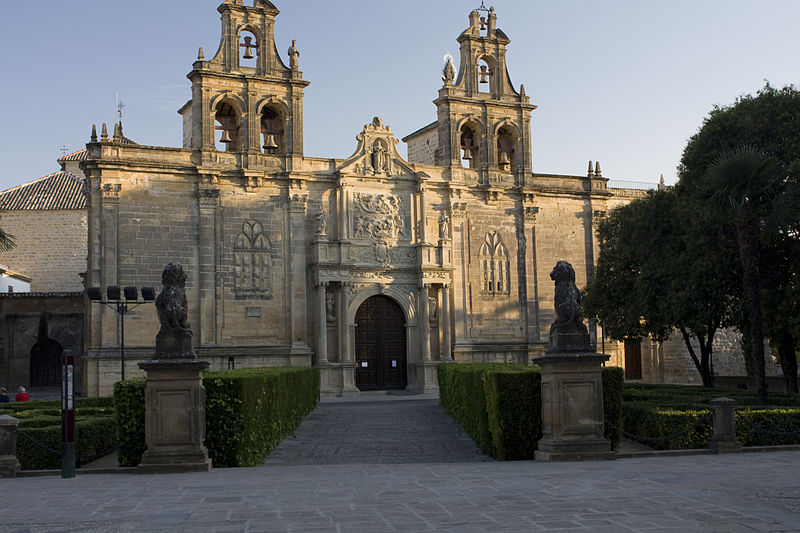
The Basilica and Royal Collegiate Church of Santa Maria la Mayor de los Reales Alcazares in Úbeda, declared a National Monument, is the main church of the city of Úbeda and the third in the diocese of Jaén. The church combines different architectural styles due to its extensive history: Gothic, Mudéjar, Renaissance, Baroque, and Neo-Gothic. The basilica venerates the patroness of Úbeda, Our Lady of Guadalupe and Gavellar. Undoubtedly, it is a unique temple in the world due to its combination of styles.
Daniel VillafruelaSchedule:
- Tuesday to Saturday: 10:45 am to 1:15 pm and 4:15 pm to 6:30 pm.
- Sunday: 10:45 am to 1:15 pm
How to get there?
- On foot: towards the historic center
- By booking our transfers
- Bus: Line 1, stop at Plaza de Santa María
- By car: there are nearby public and private parking facilities
Synagogue of the Water (Úbeda)
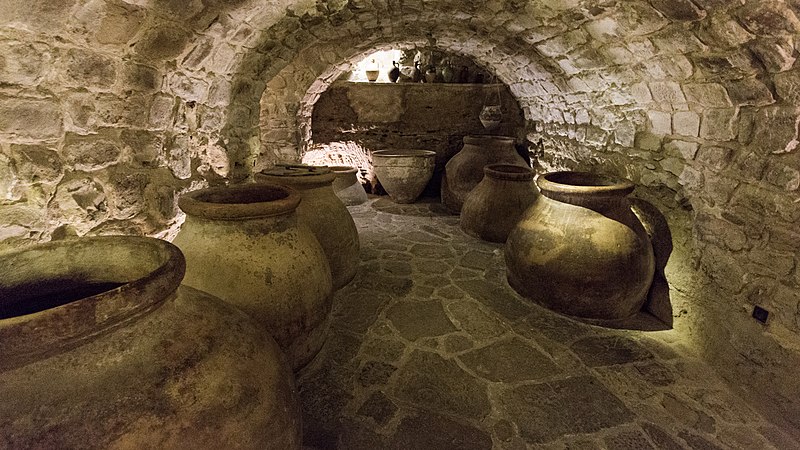
The Synagogue of the Water, located in the historic center of Úbeda, was discovered by chance when tourist apartments were being built. Today, most of the medieval rooms are preserved, such as the mikveh (Jewish ritual bath), the Women’s Gallery, the Inquisitor’s Hall, and the synagogue hall. It has been open to the public since 2010, three years after its discovery. The synagogue can only be visited in small groups with a guided tour.
Bobo BoomSchedule:
- Monday to Sunday: 10:30 am to 1:30 pm and 5:00 pm to 7:15 pm
How to get there?
- On foot: towards the historic center
- By booking our transfers
- Bus: Line 1, stop at Plaza de Santa María
- By car: there are nearby public and private parking facilities
Santiago Hospital (Úbeda)
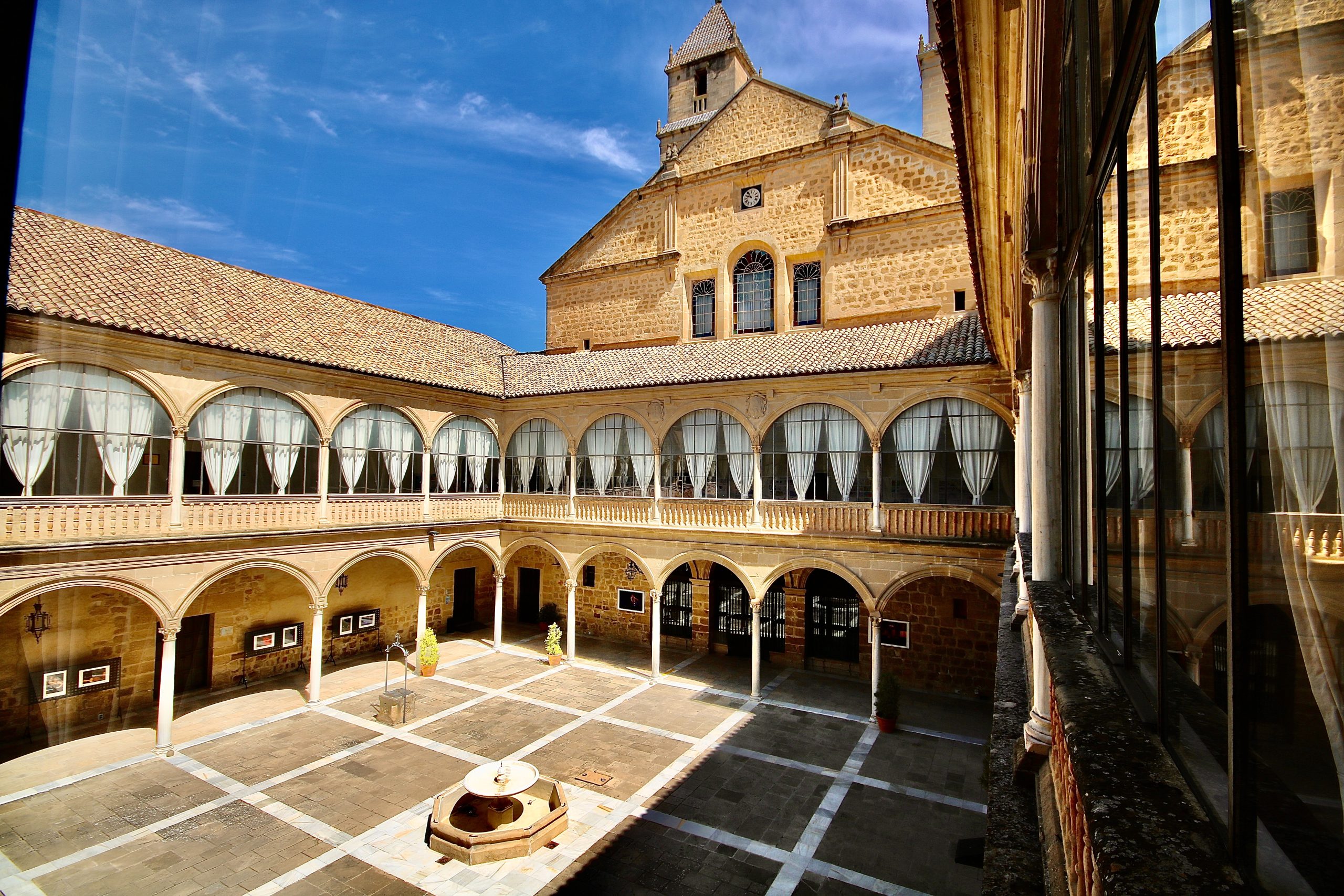
The Santiago Hospital was designed by Andrés de Vandelvira in 1562. It was commissioned by the Bishop of Jaén (Don Diego de los Cobos) as a hospital for the sick, as well as a church-pantheon and palace. It is considered one of the best works of Andrés de Vandelvira and one of the great works of Renaissance welfare architecture in Spain. It served as a hospital until 1975 and is now used as a cultural center, exhibition and congress venue, and library.
Schedule:
- Monday to Friday: 8:00 am to 1:30 pm, 3:30 pm to 9:30 pm
- Saturdays: 10:00 am to 1:30 pm and 5:00 pm to 9:30 pm
- Sundays: 10:00 am to 1:30 pm
How to get there?
- On foot: towards the historic center
- By booking our transfers
- Bus: Line 1 or 2
- By car: there are nearby public and private parking facilities
Vela de los Cobos Palace (Úbeda)
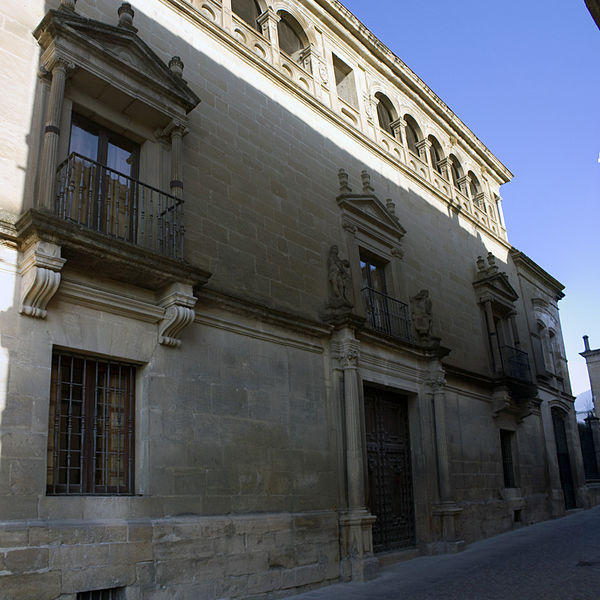
The Vela de los Cobos Palace is a manor house, a Renaissance monument that remains the habitual residence of the family that inherited it. It is worth visiting due to its excellent state of preservation, both architecturally and in terms of its furniture and pictorial collection. The building houses a library, a historical archive, as well as collections of porcelain, ceramics, antique clothing, and numismatics. The palace can only be visited with a guided tour at specific times.
Daniel VillafruelaSchedule:
- Tuesday to Saturday: 1:00 pm and 7:00 pm
- Sunday: 1:00 pm
How to get there?
- On foot: towards the historic center
- By booking our transfers
- Bus: Line 1 or 2
- By car: there are nearby public and private parking facilities
Jabalquinto Palace (Baeza)
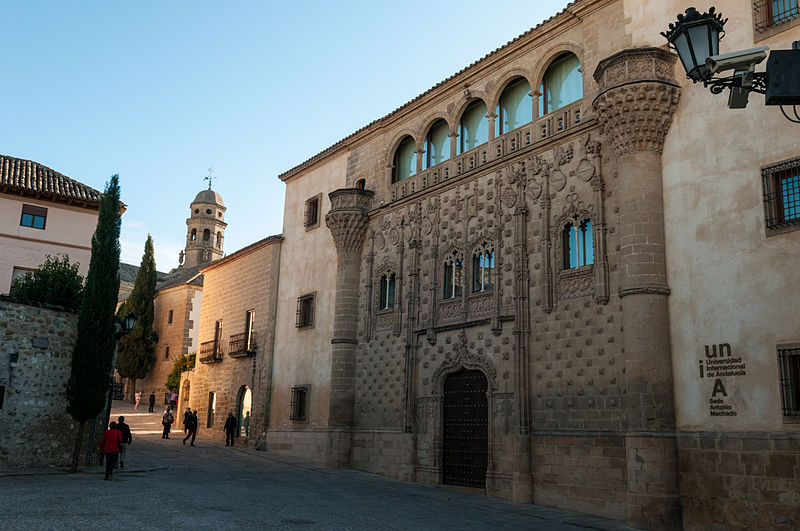
The Jabalquinto Palace is one of the greatest examples of Isabeline Gothic style, which is reflected mainly in its façade. Its late Renaissance-style courtyard (built a century after the façade) is the other most outstanding space. It was declared a Historic-Artistic Monument in 1931 and is part of a monumental trio along with the Church of Santa Cruz and the main headquarters of the former University. Palacio de Jabalquinto served as a manor residence until 1720 when it became a Minor College until the 1970s. Subsequently, it housed the School-Workshop for the Rehabilitation of Baeza’s Heritage and is currently the Antonio Machado headquarters of the International University of Andalusia.
Michal OsmendaSchedule:
- Monday to Sunday: 11:00 am to 1:00 pm
How to get there?
- On foot: towards the historic center
- By booking our transfers
- By car: there are nearby public and private parking facilities
Church of Santa Cruz (Baeza)
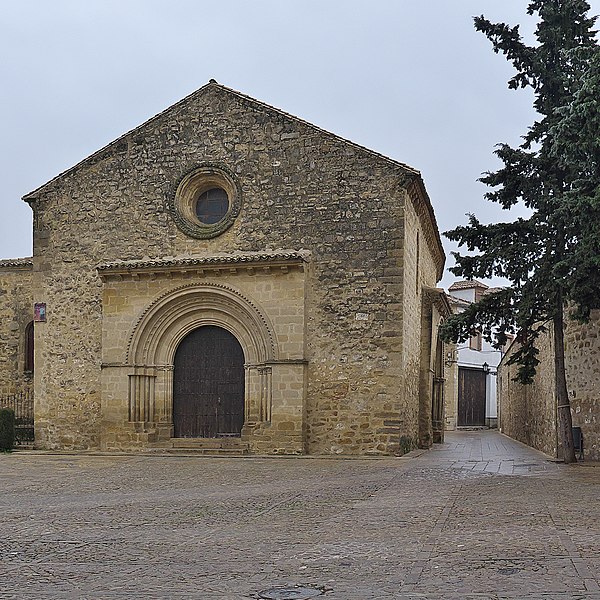
In 1227, several churches in the late Romanesque style were built in Baeza. However, today only the Church of Santa Cruz remains, located in Santa Cruz Square. It is unique because it is one of the few Romanesque constructions in Andalusia that is preserved in an optimal state. The temple houses images of a Calvary, remains of a Last Supper, and the image of the Martyrdom of San Sebastian.
Jose Luis Filpo CabanaSchedule:
- Monday to Saturday: 11:00 am to 1:00 pm and 4:00 pm to 6:00 pm
- Sundays and holidays: 12:00 pm to 2:00 pm
How to get there?
- On foot: towards the historic center
- By booking our transfers
- By car: there are nearby public and private parking facilities
Former University (Baeza)
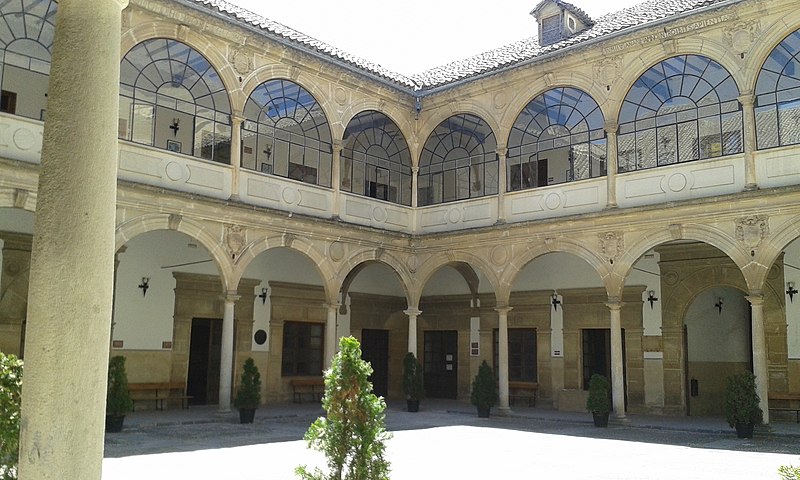
The city of Baeza has been an important university city from the 16th to the 19th century. It continues to be so today with the Antonio Machado headquarters of the International University of Andalusia. The building of the former university functioned as the College of Humanities from 1875 until it became a Secondary Education Institute. In the former University, you can visit the cloister, the assembly hall, and the Chapel of San Juan Evangelista dedicated to Fernández de Córdoba (among other chapels). There is also the Exhibition Space of Antonio Machado and Education of his Time, recommended to learn about Antonio Machado’s life in Baeza, his time as a teacher, as well as participating in interactive games and activities.
Axel Cotón GutiérrezSchedule:
- Visit to the Aula de Machado and the Assembly Hall: Monday to Sunday: 10:00 am to 2:00
How to get there?
- On foot: towards the historic center
- By booking our transfers
- By car: there are nearby public and private parking facilities
Plaza del Pópulo or Plaza de los Leones (Baeza)
This square is home to several places of interest. One of the main attractions is the Fountain of the Lions, which dates back to the 16th century. We can also find the old butcher’s shop (currently a judicial building), the Villalar Arch, the Jaén Gate (part of the medieval wall that Queen Isabella I ordered to destroy in 1476), and the Casa del Pópulo, a Plateresque building that houses the Baeza Tourist Office.

How to get there?
On foot: towards the historic center- By booking our transfers
- By car: there are nearby public and private parking facilities
Plaza de Santa María and Cathedral of the Nativity of Our Lady of Baeza (Baeza)
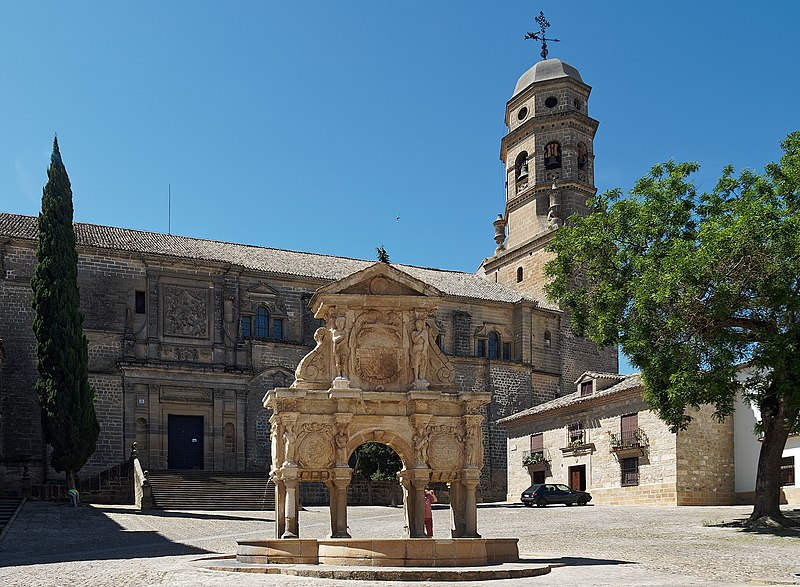
Plaza de Santa María is located in the historic center of Baeza, where the Cathedral is also situated. The combination of the square and the Cathedral offers beautiful views, making it the most iconic place in the city. In addition to the monuments surrounding the square, the square itself features the Fountain of Santa María, a commemorative monument of the arrival of water to the city in 1564. It is considered one of the most beautiful and original fountains in Andalusia. As for the Cathedral, its Renaissance style makes it a building of great value. It dates back to the 13th century, and its architect was the famous Andrés de Vandelvira.
How to get there?
- On foot: towards the historic center
- By booking our transfers
- By car: there are nearby public and private parking facilities
